Independent informational profile. Not an official Government of India website.
Portfolio · Department of Space
Space & Space Applications
The Department of Space, to which ISRO belongs, comes under the Prime Minister. Dr. Jitendra Singh is the Minister of State in the Department. This page records the sector's reforms and missions, and his documented part in them: parliamentary replies, public statements and events he attended.
Portfolio verified: 23 September 2026Minister of State
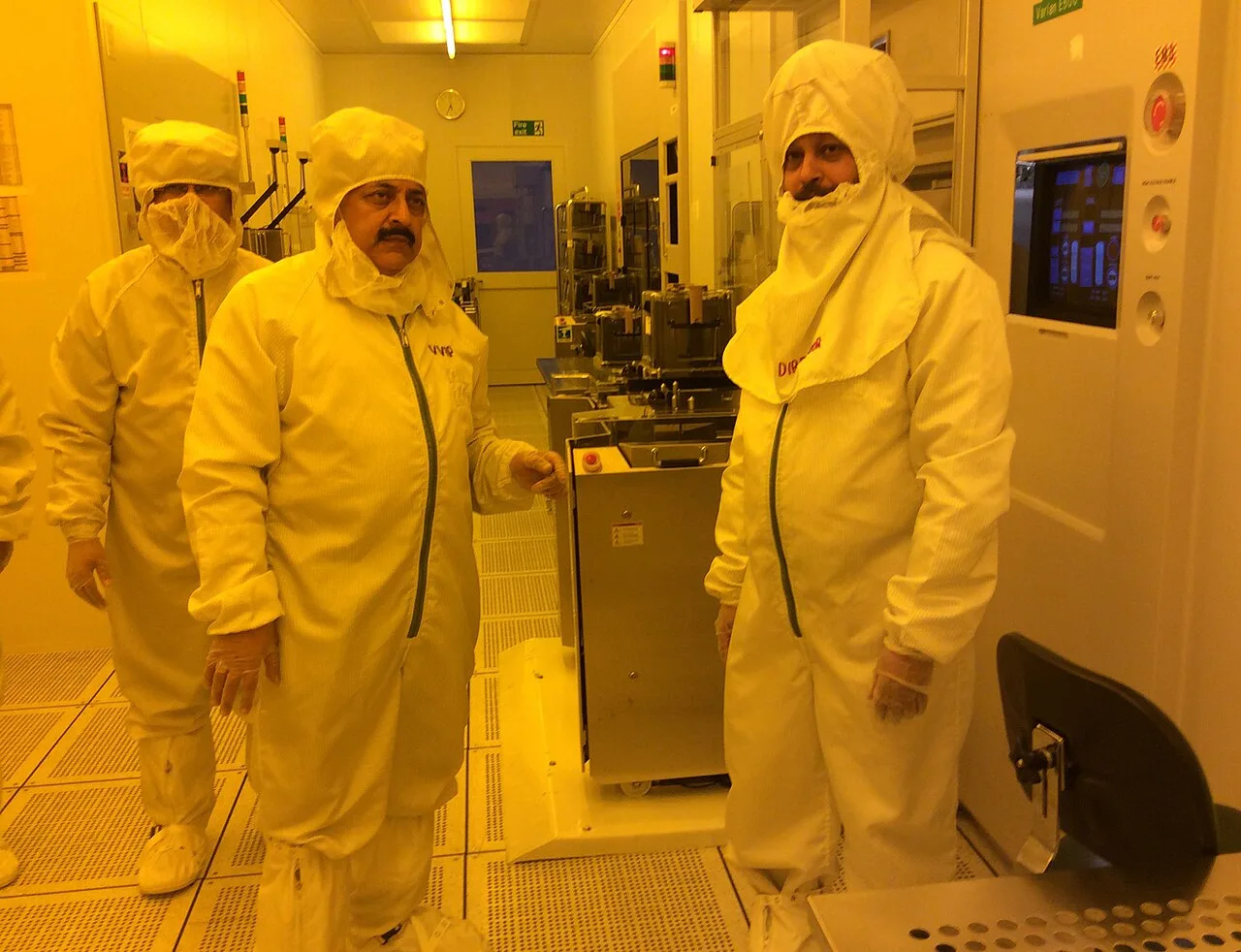
Fig. 01Visiting the Semiconductor Laboratory (SCL) of the Department of Space, Chandigarh, on 1 February 2015, as described in the PIB photograph record on Wikimedia Commons. SCL, Mohali, now describes itself as an autonomous body under the Ministry of Electronics & IT.
Orbit I · Policy
Opening the space sector
Between 2020 and 2025 the Government opened space activity to private companies in stages. Each item below is a government decision. The Minister's role was to explain and report on these decisions in Parliament and in public.
202024 June
Policy
Private participation & IN-SPACe
The Union Cabinet approved private participation in space activities. The Indian National Space Promotion and Authorisation Centre (IN-SPACe) was created to provide “a level playing field for private companies”.
In a Rajya Sabha written reply on 10 August 2023, Dr. Jitendra Singh said the policy “has been approved and released in the public domain”. It opens the sector to non-government entities and sets out the roles of IN-SPACe, ISRO, NewSpace India Limited (NSIL) and the Department of Space.
The Cabinet decided that “100% FDI is allowed in space sector”. The automatic route covers up to 74% for satellite manufacturing and operation, up to 49% for launch vehicles and spaceports, and up to 100% for components.
According to a Lok Sabha reply of 1 April 2026, the ₹1,005 crore fund was registered with SEBI on 31 October 2025, and investments are expected from FY2027.
These figures were given in Parliament and at press events. Space-economy estimates are the Minister's statements and are not independently audited.
~440Space technology startups registered on the DPIIT portalParliament answer, 12 Aug 2026 · PIB 2298178
113Authorisations granted by IN-SPACe to 52 non-government entitiesParliament answer, 12 Aug 2026 · PIB 2298178
118Technology transfer agreements signed by NSILParliament answer, 12 Aug 2026 · PIB 2298178
$8.4bnSpace economy “about $8.4 billion”, which he said could reach $40–45 bn in 8–10 yearsMinisterial statement, Rajya Sabha, 29 Jan 2026 · PIB 2220433
Startup counts vary by date and source. The Rajya Sabha was told of “399 start-ups” on 29 January 2026, and the Minister referred to “400+” at the 10th IN-SPACe Industry Connect on 11 June 2026 (PIB 2271728).
Orbit III · Missions
Mission record
These are ISRO's institutional achievements. The Minister's part, where the sources record one, was to announce, comment on or attend the event. Each entry is labelled accordingly.
Institutional achievement
Chandrayaan-3 soft landing
Chandrayaan-3 made a soft landing near the lunar south pole. 23 August is now observed as National Space Day. At the first National Space Day in 2024, Dr. Jitendra Singh said an Indian would land on the Moon “in the year 2040”.
The Space Docking Experiment achieved docking. After the PSLV-C60 launch on 31 December 2024, the Minister called the mission “a Giant Leap”. After the docking he said: “SpaDeX has accomplished the unbelievable docking complete and it is all indigenous ‘Bharatiya Docking System’.”
After Shubhanshu Shukla's splashdown following an 18-day stay on the International Space Station, the Minister said: “One of Mother India's illustrious sons is back. India has found a lasting space in the world of space.”
The NASA–ISRO Synthetic Aperture Radar satellite was launched on GSLV-F16. The Minister watched the launch from the CSIR Auditorium, New Delhi, and said: “NISAR is not just a satellite; it is India's scientific handshake with the world.”
In the valedictory address, the Minister proposed a “BRICS Space Economy” and released an Indian Space Industry Brochure. He said: “The future of the space economy will not be shaped by nations working in isolation.”
Official statements on Gaganyaan's timeline have been revised over time. They are set out here in order and are not presented as a firm schedule. The current figures are the most recent statement.
The Minister has also stated long-term goals: the Bharatiya Antariksh Station, to be operational by 2035, and an Indian on the Moon by 2040. These are stated objectives, not completed outcomes.
6 May 2025
Media interaction, National Media Centre
He said the first human spaceflight was “scheduled for the first quarter of 2027”.
The first uncrewed mission, carrying the humanoid Vyommitra, is “targeted during the fourth quarter of 2026”, with two more uncrewed missions by 2027. “Bharatiya Antariksh Station (BAS) is planned to be operationalised by 2035.”
Text of the PIB release, via a verbatim mirror. The original PIB page was not traced. globalsecurity.org
Orbit V · Applications
Space for everyday services
The Minister's documented statements on space applications refer to earth observation, communications and navigation.
Earth observation
NISAR, launched in July 2025, is a joint NASA–ISRO radar mission for observing Earth's surface. Satellite data also feeds India's geospatial ecosystem. See Geospatial Science.
Satellite communication
At the Satcom summit of India Mobile Congress 2025 (8 October 2025), the Minister said satellite communication would connect rural India, and projected a space economy of about $44 billion by 2033. PIB 2176408
Industry participation
At the 10th IN-SPACe Industry Connect (11 June 2026), he urged industry to scale up investment in space. PIB 2271728